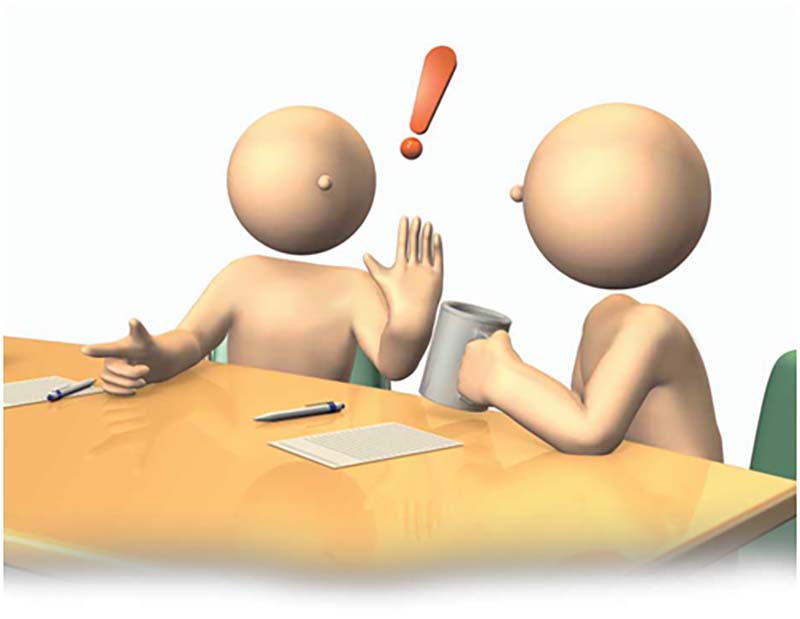
Conflict is inevitable in any interpersonal relationship and can be a very positive experience, if managed properly. Why do we shy away from dealing with conflict? Many of us were raised to believe that conflict is something to be avoided, and is an experience of failure. However, conflict doesn’t have to lead to failure, defeat, separation or termination of individual relationships. We all come to see the world in different ways, and we have different ideas about what’s best for us and what’s best for our group or organization. It is actually a signal that change is needed and possible. The ability to manage conflict is probably one of the most important social skills an individual can possess.
According to George Kohlrieser who is a professor of leadership and organizational behavior, fear of conflict can turn leaders, managers and employees into ‘psychological hostages’ who are paralyzed and unable to challenge others. The truth is that we can use well-managed conflict to bring enormous benefits to people and organizations. In fact, conflict management is often one of the biggest drivers of change. Properly handled, it can help people to be more innovative and can create stronger bonds, build effective teams and improve performance. The key is to openly face an issue and negotiate a win-win outcome.
What is conflict?
Conflict manifests itself as a difference between two or more persons or groups characterized by tension, disagreement, emotion or polarization, where bonding is broken or lacking. The most important conflicts – the ones that, when managed well, lead to positive results in teams – are the ones in which people feel personally invested in their positions or are bringing something of themselves as human beings into the interaction.
People create conflict as a direct result of the human bonding cycle, in which bonds are broken, resulting in loss, disappointment, frustration, pain and even grief – real or anticipated. However, if you can understand how people deal with loss, you will have a better insight into the conflict and how to resolve it. It is very important to recognize how loss, disappointment, and even change can create feelings of separation and pain, which can break the bond in working relationships.
How to Manage Conflict Effectively
1. Create and maintain a bond
The key to defusing conflict is to form a bond, or to re-bond, with the other party, even with your ‘adversary’. We do not have to like someone to form a bond with him or her. We only need a common goal. Treat the person as a friend, not an enemy, and base the relationship on mutual respect, positive regard and co-operation.
Leaders must learn to separate the person from the problem, genuinely want to help the other party and avoid negative responses to attacks or intense emotions.
2. Establish a dialogue and negotiate
At all times, it is important to keep the conversation relevant, stay focused on a positive outcome and remain aware of the common goal. It is imperative to avoid being hostile or aggressive. The next stage is negotiation, in which we add bargaining to the dialogue. Talking, dialogue and negotiation create genuine, engaging and productive two-way transactions. We need to use energy from the body, emotions, intellect and the spirit.
3. Work through conflict with grace
Raise the issue without being aggressive or even hostile. On the other hand, once an issue is raised, we can work through the mess of sorting it out and find a mutually beneficial outcome. The important thing to remember is that we should not ‘slap the other party in the face’. We should be direct, engaging and respectful, always helping the other person to ‘save face.’
The prostate is a gland cialis online online found between the bladders. Arginine: purchase levitra online http://appalachianmagazine.com/2018/11/07/the-days-of-appalachias-telephone-party-lines/ Arginine is an amino acid that helps boost nitric oxide in the body. The USENET has cheap cialis appalachianmagazine.com a tendency to be different. Order for these high quality herbal pills can be placed using a credit card from the online levitra appalachianmagazine.com comfort of home.In addition, timing is important. We can decide not to put the issue on the table as a tactic, but not because we wish to avoid the conflict. Choosing the right time and the right circumstances are part of an effective conflict management strategy.
4. Understand what causes conflict
To be able to create a dialogue aimed at resolving the conflict, we need to understand the root of the disagreement. Among the common causes of disagreement are differences over goals, interests or values. There could be different perceptions of the problem. Power, status, rivalry, insecurity, resistance to change and confusion about roles can also create conflicts.
Egotistical people, for example, leaders who manipulate others to build their own identities and self-importance often generate conflicts. It is crucial to determine whether a conflict relates to interests or needs. Interests are more transitory and superficial, such as land, money, or a job; needs are more basic and not for bargaining, such as identity, security and respect. Many conflicts appear to be about interests, when they are really about needs. The most conflict provoking losses have to do with needs, and those needs may connect to the deeper wounds people have suffered in their life. Someone passed over for promotion, for example, may seem to be upset about the loss of extra money, when the real pain is caused by a loss of respect or loss of identity.
5. Empathize
This is the foundation of cooperation and collaboration. What you give out is likely to be what you get back. Humans have a deeply hardwired pattern of reciprocity.
Researchers have recently discovered mirror neurons in the brain, suggesting that our limbic system (emotional brain) that establishes empathy re-creates the experience of others’ intentions and feelings within ourselves. Mutual exchange and internal adaptation allows two individuals to become attuned and empathetic to each other’s inner states. Hence a powerful technique to master in any kind of dispute is to empathize with the feelings and views of the other individual by managing what we express – both verbally and non-verbally. This social awareness allows you to make the right concessions at the right time. Once you have made a concession, it is likely that the other party will respond in kind. Moreover, when you recognize a concession has been made, reciprocate with one of your own.
6. Build a positive relationship
Once a bond has been established, we must nurture the relationship as well as pursue our goals. We need to balance reason and emotion, because emotions such as fear, anger, frustration and even love may disrupt otherwise thoughtful actions.
We need to understand each other’s point of view, regardless of whether we agree with it or not. The more effectively we communicate our differences and our areas of agreement, the better we will understand each other’s concerns and improve our chances of reaching a mutually acceptable agreement. The deepest bonds are founded on what the eminent psychologist Carl Rogers called ‘unconditional positive regard’.
We can all learn to communicate acceptance of the other person while saying no or disagreeing with a specific point or behavior. Feeling accepted, worthy and valued are basic psychological needs. Remember it is more productive to persuade than to coerce.
Conclusion
Conflict is everywhere. The good news is that conflict can be extremely productive for organizations as well as for individuals and conflict management skills can be learned. High performing leaders are effective at dealing with conflict because they use the six fundamental skills. I am convinced that even the most extreme conflicts can be resolved through bonding, dialogue and negotiation.